


Introduction: Why SEO is different
In the fast-paced world of digital marketing, businesses often chase quick wins — instant leads, immediate sales, overnight results. Paid ads promise rapid traffic, influencer campaigns offer sudden bursts of visibility, and social media ads flood inboxes with offers. But what happens when the budget runs out? The traffic dries up, the leads stop coming, and momentum stalls.
Search engine optimization (SEO), however, plays a very different game. SEO is not about instant gratification; it’s about building a foundation that compounds in value over time. Once planted and nurtured, SEO efforts continue to grow, delivering results month after month, year after year, without the same ongoing spend that paid channels demand. Let’s explore why SEO stands alone as the marketing investment that keeps giving.
What compounding means in marketing
When we talk about “compounding” in marketing, we borrow a term from finance. Compounding refers to growth on top of growth — interest earning more interest, creating exponential returns over time.
In marketing, true compounding happens when previous efforts continue to generate results without constant re-investment. SEO exemplifies this. A blog post written today can still drive hundreds, even thousands of visits years from now, helping to boost your site’s authority, generate leads, and build brand awareness — all from a one-time investment.
Compare that to ads: every impression, every click must be paid for.
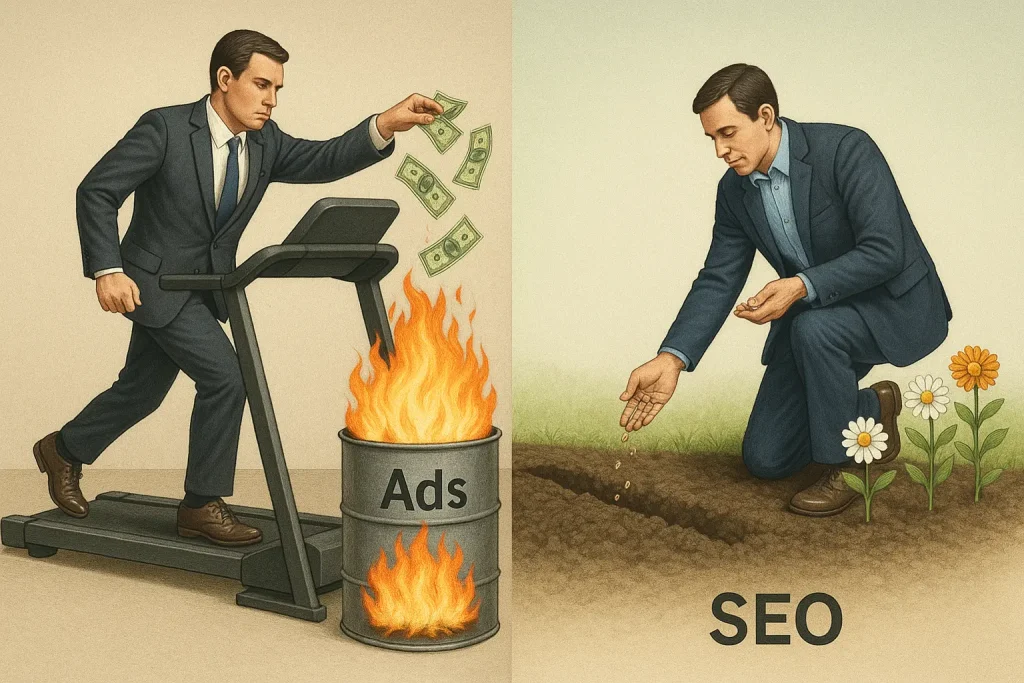
Why paid advertising is temporary
Paid ads work. No one denies that. But they have an expiry date tied directly to your budget.
- Immediate but short-lived: Once your Google Ads, Facebook Ads, or LinkedIn campaigns end, so does your traffic.
- Cost escalates: As competition rises, so do ad costs. You end up paying more for the same visibility.
- No lasting brand building: Very few people remember ads they clicked on six months ago.
Paid media is like renting an apartment — you have shelter as long as you keep paying. SEO is like owning a home — your investment appreciates over time.
How SEO builds momentum over time
SEO works differently because it’s based on trust, relevance, and authority — three things that don’t disappear overnight.
- Evergreen content: A great article answering “how to fix a leaking faucet” will be useful today, next year, and five years from now. As long as people search for that problem, your content remains relevant.
- Domain authority grows: Every backlink, every high-quality post, every positive user signal strengthens your site’s credibility with search engines.
- Network effect: As your SEO improves, it becomes easier to rank new pages, attract organic links, and expand your audience — creating a snowball effect.
Each effort builds on the last. SEO momentum compounds, turning your website into a powerful, self-sustaining machine.

The snowball effect: How organic traffic grows
Imagine publishing 50 high-quality blog posts over a year. Each post starts attracting a handful of visitors per month. At first, it seems slow — maybe just a few hundred visits.
But over time:
- Old posts continue pulling in traffic.
- Some posts get shared, earning natural backlinks.
- Google rewards consistent, quality content with higher rankings.
- Visitors start exploring other parts of your site, boosting engagement metrics.
What started as small streams of traffic becomes a river. This is the snowball effect of SEO — growth that gets bigger and faster over time.
SEO vs. paid ads: Long-term ROI comparison
At first glance, paid ads seem cheaper because they deliver immediate results. But when you stretch the timeline to six months, one year, or five years, SEO crushes paid media on return on investment (ROI).
- Paid ads ROI decreases over time due to rising costs and fatigue.
- SEO ROI increases over time as content matures, rankings stabilize, and authority grows.
Investing $10,000 into ads might get you traffic for a month. Investing $10,000 into SEO can deliver traffic for five years or more — without another dollar spent.
Building brand authority through SEO
SEO does more than drive traffic. It builds your brand’s credibility and authority in your market.
- Ranking high in organic search results signals trustworthiness.
- Useful, valuable content establishes expertise.
- A strong organic presence earns customer loyalty.
While ads can get your name in front of people, SEO earns their trust — a much harder and more valuable currency in business.
Why businesses underestimate SEO
Many businesses make the mistake of underinvesting in SEO because it doesn’t deliver overnight wins. SEO requires patience, consistency, and a long-term mindset.
- SEO is harder to measure in the short term: You might not see massive changes month to month.
- It requires upfront investment: Content, technical SEO fixes, and link-building all take time and resources.
- Results snowball: At first slow, then unstoppable.
Those who understand and commit to SEO early reap disproportionate rewards later — leaving competitors wondering what happened.
Critical SEO strategies to maximize compounding effects
To fully benefit from SEO’s compounding nature, businesses must focus on:
- Evergreen content creation: Focus on topics that stay relevant over time.
- Technical SEO excellence: Fast-loading, mobile-friendly, secure websites rank better.
- Consistent content publishing: The more quality content you produce, the bigger your footprint.
- Link building: Earning natural backlinks accelerates domain authority growth.
- Content refreshing: Updating old content keeps it relevant and competitive.
SEO is not a one-time effort. It’s a living, breathing asset that requires nurturing to achieve full compounding growth.
Case studies: SEO success stories
Consider brands like HubSpot, Ahrefs, or even small businesses like niche e-commerce stores. They built their empires not through endless paid ad spending, but by investing heavily in SEO early on.
Today, they dominate their markets — often spending far less on customer acquisition than their ad-dependent competitors.
Their secret? Playing the long game with SEO.
Why ignoring SEO is a huge risk
Businesses that ignore SEO today set themselves up for higher costs and diminishing returns tomorrow.
- Ads get more expensive every year.
- New customer acquisition gets harder.
- Competitors who invested in SEO build moats you can’t easily cross.
SEO isn’t optional. It’s essential for future-proofing your business against rising marketing costs and platform volatility.
Conclusion: Plant seeds today, harvest rewards tomorrow
SEO is the only marketing investment that truly compounds over time. While others spend endlessly just to maintain visibility, those who prioritize SEO plant seeds that grow stronger with each passing month and year.
Invest in SEO now. Be patient. Watch your brand’s visibility, authority, and profits grow exponentially — while others stay stuck on the paid advertising treadmill.
FAQs
How long does it take for SEO to show results?
Typically, SEO efforts start showing significant improvements within 3 to 6 months, but major growth often takes 12 months or longer.
Can SEO completely replace paid ads?
While SEO can eventually drive the majority of your traffic, a balanced approach combining SEO and strategic paid ads often works best.
Is SEO still worth it in the age of social media?
Absolutely. Organic search remains a primary driver of website traffic and brand discovery, often outperforming social media in terms of ROI.
What are beginner-friendly SEO strategies?
Focus on writing helpful, evergreen content, optimizing for speed and mobile, and earning quality backlinks.
How much should a company invest in SEO annually?
Budgets vary, but many successful companies invest 10–20% of their total marketing budget into SEO for best results.
